Afternoon Tea Etiquette: A Beginner's Guide
Afternoon tea has a reputation for fussiness. Mostly it is a handful of quiet habits that keep a long, slow meal pleasant for everyone at the table — and they are easier to learn than the long-running argument about jam and cream suggests. Whether you have been invited to a hotel tearoom, a friend's garden, or a village hall fundraiser, here is what to expect, in what order, and how to handle the cutlery without a second thought.
What Afternoon Tea Is, and What It Isn't
Afternoon tea is a light meal taken in the middle of the afternoon, traditionally somewhere between three and five o'clock. It has three parts: small sandwiches, scones with jam and cream, and a few sweets, all served with tea. That is the whole shape of it. Everything else is variation.
The names around it get muddled, so it helps to keep them straight:
- Afternoon tea — the full spread described above, sometimes called "full afternoon tea" on menus.
- Cream tea — scones, jam, cream and a pot of tea. Nothing else. Short and excellent.
- High tea — historically a working supper, eaten later and including a hot dish. Not the grand version, whatever the hotel sign says.
- Elevenses — a mid-morning cup and a biscuit, and not really a meal at all.
If a hotel advertises "high tea," they almost certainly mean afternoon tea. If a British family invites you to high tea at home, expect something heartier and much less ceremonial.
The Order of Courses
Work from savoury to sweet. The food usually arrives at once on a tiered stand or a large platter, which means the ordering is up to you.
- Sandwiches. Cucumber, smoked salmon, egg mayonnaise, ham. These are cut small for a reason: two bites each, no cutlery needed, no crumbs down your front.
- Scones. Served with jam and clotted cream, sometimes with butter as well.
- Pastries and sweets. Little tarts, éclairs, shortbread, a slice of battenberg.
Nobody will police this. But the order exists for a reason: the sandwiches are the lightest and most savoury, and finishing with sugar leaves the palate where it wants to be. Take one of each item as the tray comes round. You can always go back; you cannot un-take a fifth éclair.
Managing a Tiered Stand
Bottom tier, sandwiches. Middle tier, scones. Top tier, sweets. Take what you want from the relevant tier and put it on your own plate — never eat directly from the stand, and never lift the whole thing toward yourself. If the stand sits in the middle of the table, it is for everyone; the small plate in front of you is yours. Pass the stand, or ask for it, rather than reaching across someone's cup.
Napkins, Cutlery and the Cup
Unfold the napkin and lay it across your lap, fold toward you. If you leave the table mid-meal, place it loosely on your chair. At the end, fold it loosely and leave it to the left of your plate. Wipe your fingers on it discreetly. You do not need to tuck it into your collar, and doing so will make you the most memorable guest for the wrong reason.
Most settings give you a small knife and fork. Use them for anything creamy, slippery or awkward: a filled pastry, a tart, a scone half piled with cream. Sandwiches are finger food — that is not laziness, it is the point of the format. Rest your cutlery on the plate between bites rather than waving it while you talk.
For the cup: hold the handle between your thumb and one or two fingers. Do not hook your little finger out; that is an old affectation, not a rule. Return the cup to the saucer between sips. When you stir, move the spoon gently back and forth rather than round and round, keep it off the rim, and rest it on the saucer when you are done. Never leave it standing in the cup.
Tea, Milk and Lemon
The modern convention is tea first, milk after. The old milk-first habit is usually explained as protecting delicate porcelain from hot tea, though that story is told more often than it is verified. Either way, ask before you pour for someone else, and offer milk rather than adding it.
Lemon, not both. If a slice arrives, squeeze it gently with your fingers or a fork, remove the pips, and leave the slice on the saucer or the side of your plate. Do not blow on tea that is too hot; let it sit for a minute. Tapping the spoon against the rim to shake it dry will be heard across the room.
The Scone Question
Jam first, then cream — that is Cornwall. Cream first, then jam — that is Devon. Outside those counties, there is no wrong answer, and anyone who insists otherwise is enjoying the argument more than the scone. If you are a guest in a particular county, follow your host and keep your opinion to a smile.
Technique matters more than order. Break the scone into halves with your fingers; it is crumbly by design and a knife will simply mangle it. Apply jam and then cream to each half with the small knife, and eat each half in a bite or two. Building a single towering mouthful is a party trick, not etiquette.
Conversation and Bearing
Afternoon tea is a slow meal, and the talk should match. Ask about the tea itself — the blend, where the leaves came from, who chose the scones. Compliment something specific. Steer clear of money, illness, work politics, and the cost of the meal you are eating, all of which land badly over a delicate cup.
Phones stay silent and out of sight; if you must take something, excuse yourself and leave the table. Match the pace of the room. Being first to clear every plate looks rushed; being last to finish every course holds everyone up.
Putting It Into Practice
Six things, and you are fine:
- Napkin on lap before you touch anything.
- Savoury first, sweet last, one of each to begin.
- Sandwiches in your fingers; knife and fork for anything creamy.
- Cup back on the saucer between sips, spoon resting on the saucer.
- Break the scone with your fingers, then add jam and cream.
- Thank the host for something specific on the way out.
Nothing on this list is difficult, and none of it is meant to catch you out. Afternoon tea is a meal built around sitting still for an hour with good company. Follow the host's lead, keep your voice and your cutlery quiet, and the only thing anyone will remember is how comfortable the afternoon felt.
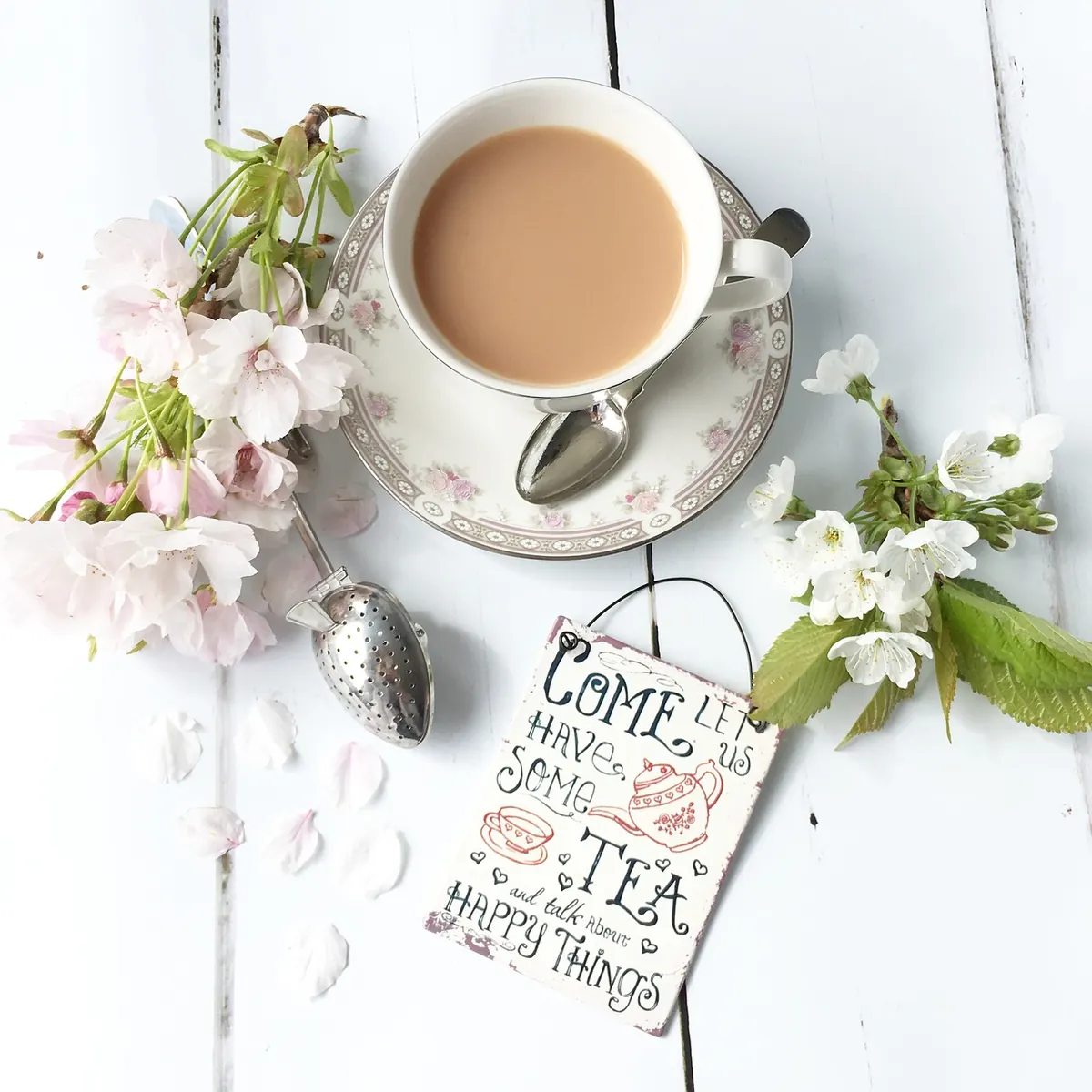
Photo: RecklessHen / Pixabay
Seasonal Tea Blending: How to Mix Your Own Spring, Summer, Fall, and Winter Blends
Build your own spring, summer, fall, and winter tea blends using a simple parts-based formula, seasonal...
8 Common Tea Brewing Mistakes and How to Fix Them
Bitterness, flatness, and watery cups usually trace back to eight fixable habits — water quality,...
About Us